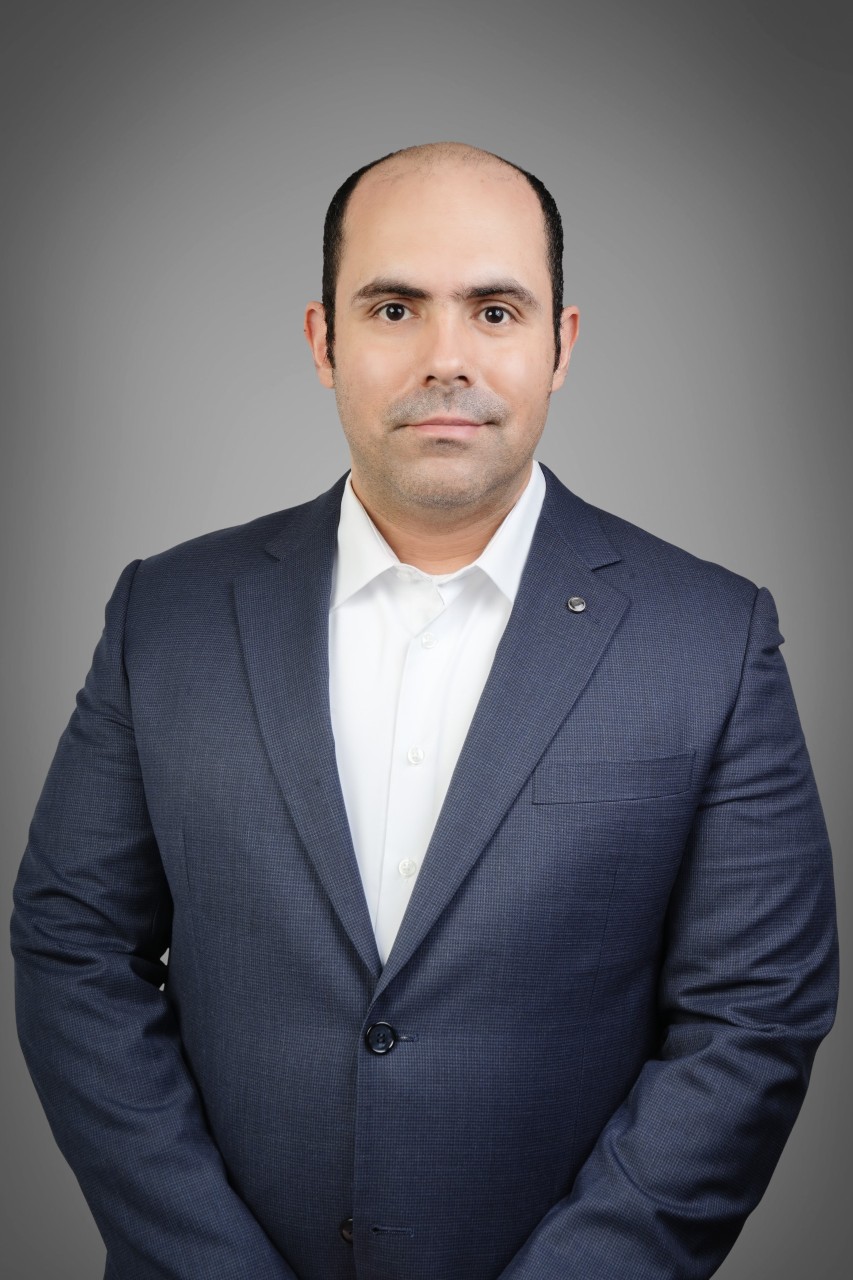
For Eduardo R. Bianco V., a career in the energy sector has involved managing risk in uncertain environments. Traditional engineering projects rely on structured approvals, predictable milestones, and safeguards for people and the environment. As digital technologies became more prominent in the United Arab Emirates’ energy sector, he began examining a tension between established governance processes and the speed of artificial intelligence (AI).
Drawing on his operational experience, Eduardo returned to academia to investigate how organizations could integrate AI into project risk management while maintaining human accountability and operational control. His research led him to develop a proposed framework for managing the relationship between technical systems, organizational processes, and people.
The foundation: managing complex energy projects
According to his supplied biography, Eduardo is a Chemical Engineer with more than 18 years of experience in the energy sector. His career includes more than a decade managing integrated projects for SLB across Abu Dhabi, the North Sea, the Caspian Sea, and the Americas.
Much of this work followed traditional waterfall project management methods, in which phases proceed through defined approval stages. In capital projects, these stage gates help manage safety, engineering requirements, and project risk.
As the industry adopted technologies associated with Energy 4.0, Eduardo observed that some predictive tools remained confined to pilot programmes. He wanted to understand why technologies with potential operational value could be difficult to integrate into established project environments.
The turning point: examining the decision speed gap
Eduardo describes the tension between rapid AI-generated insights and slower approval processes as the ‘Decision Speed Gap’. In his account, this became a practical challenge for project management offices seeking to introduce digital tools into established governance structures.
“We were equipping our projects with Formula 1 engines, but we were still steering them with the brakes on,” Eduardo reflects. “An AI diagnostic tool could flag a narrow window of opportunity to optimize a supply chain or intervene in a drilling anomaly in milliseconds. But to act on that insight, a project manager had to submit it through a traditional governance review cycle that took 48 hours or more. By the time the approval cleared, the operational window was closed.”
This example reflects Eduardo’s experience and perspective; the timing should not be read as a benchmark for every organization or AI system. He came to view organizational processes as an important barrier to adoption alongside technical considerations.
To investigate these challenges, he pursued an MBA at York St John University. His dissertation explored the relationship between people, technology, and governance in AI-supported project risk management within capital-intensive energy environments in the UAE.
The journey: developing a framework for parallel ways of working
Returning to academia required Eduardo to move from executing projects to examining how they are managed. For his dissertation, he reports conducting 18 semi-structured interviews with Chief Digital Officers, senior project managers, and technical subject matter experts working in UAE and international energy firms.
His account of the interviews highlights concerns about trusting opaque AI systems and fitting iterative development into established project management structures. He describes these concerns as ‘governance anxiety’. The findings represent the perspectives of the participants in his qualitative study, rather than a statistical measure of the entire sector.
Eduardo’s proposed approach, which he calls ‘Methodological Ambidexterity’, combines structured governance for physical project milestones with iterative methods for digital development.
“You cannot iterate the installation of an offshore jacket; physical milestones must remain strictly governed by traditional safety protocols,” Eduardo explains. “But the digital risk layer predicting schedule delays must operate simultaneously in continuous Agile sprints. Methodological Ambidexterity is the organizational capability to manage these two realities at the exact same time.”
He brought these ideas together in a Socio-Technical Toolkit. The proposed toolkit addresses data silos, explainable AI, human trust, and psychological safety for the workforce. Its purpose is to help organizations consider how digital tools can operate within environments that require clear responsibility and control.
Sharing the research with the project management community
In September 2026, Eduardo presented his research to the Project Management Institute (PMI) UAE Chapter. The chapter advertised the session as ‘Scaling AI in Projects Risk Management in the UAE Oil and Gas Sector’.
According to the event figures supplied by Eduardo, the webinar attracted 764 registrants and nearly 400 live attendees. He also reports that nine questions were submitted during a seven-minute period, covering subjects such as AI accountability, cybersecurity, and return on investment.
His supplied feedback figures include a speaker rating of 4.04 out of 5, a relevance figure of 87.1%, and a 100% willingness-to-recommend figure among surveyed participants for future PMI academic activities. The number of survey respondents and the precise relevance question have not been supplied. These figures describe reported audience feedback; they do not establish adoption of the toolkit or measurable operational improvements.
For Eduardo, the session offered an opportunity to connect academic research with questions that practitioners were asking about responsible AI governance.
Reflection: keeping people at the centre of change
Eduardo sees his move from operational engineering into academic research as part of his development as a leader. It reinforced his interest in the human responsibilities that accompany digital transformation.
“Successful AI integration is not just about the algorithm; it is about building a socio-technical environment that preserves human accountability, trust, and operational control,” he notes.
For professionals introducing new technologies into established industries, his advice is to examine organizational friction alongside the software: how decisions are made, who is accountable, and what people need in order to use a system with confidence.
Eduardo says he is applying the toolkit within his operational work and hopes to contribute further to the project management community. His draft describes an ambition to seek a volunteer position on the PMI UAE Chapter board; this is a future goal, rather than a current board appointment.
His journey illustrates how experience can provide a starting point for further learning. The questions he encountered in engineering became the basis for research, professional discussion, and a broader focus on how people and technology work together.