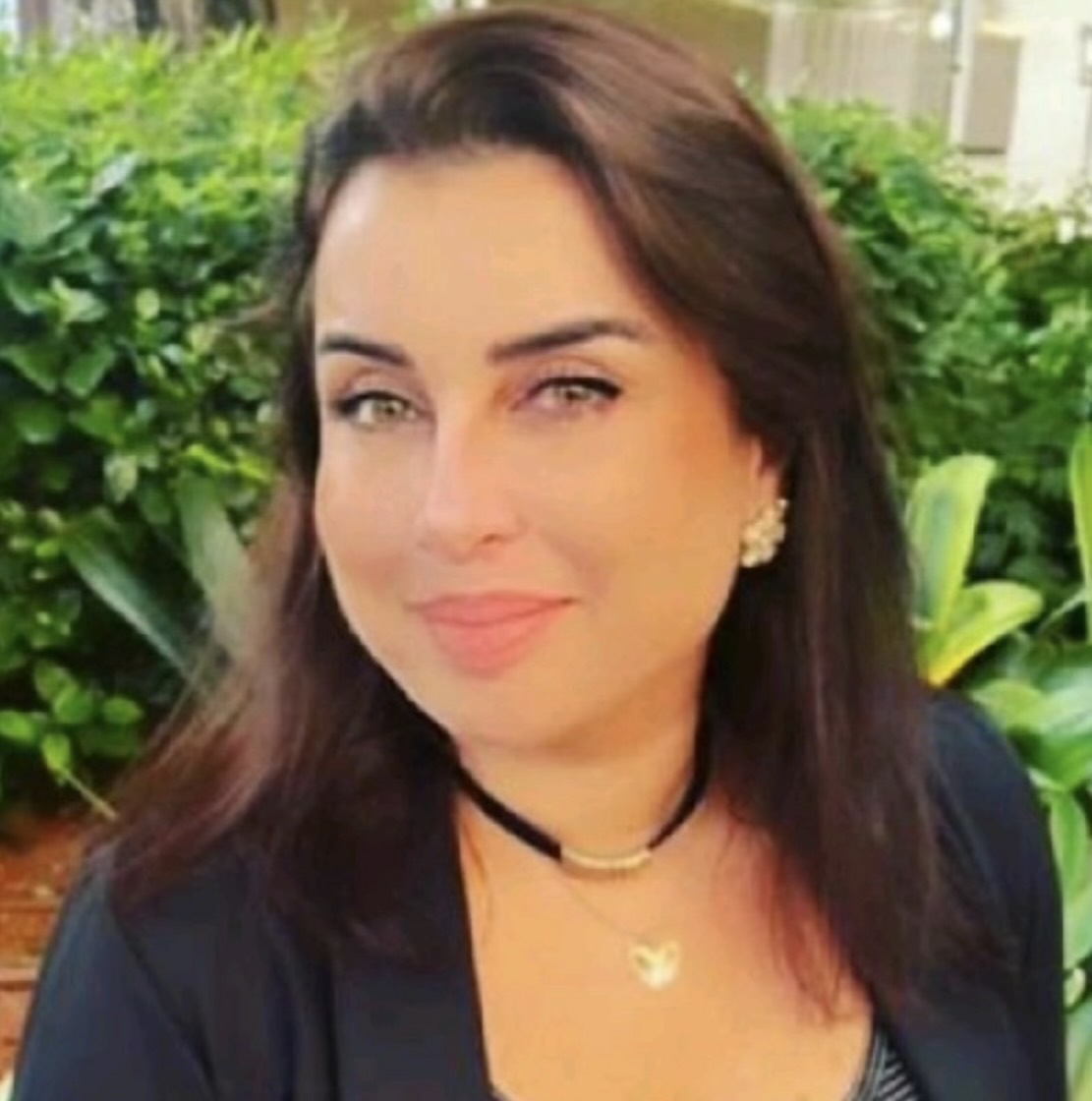
Careers rarely develop exactly as planned. Sometimes opportunity shapes them, sometimes deliberate choices do, and sometimes circumstances force us to reconsider everything we thought we knew about our professional future.
For Gina Saad, PMP®, more than a decade of managing technical medical and laboratory projects in Lebanon provided a strong professional foundation. With an engineering background, her work required technical understanding, precision, stakeholder coordination, problem-solving and the ability to manage complex projects where operational and technical requirements had to come together.
For many years, that provided continuity. Gina accumulated significant practical project-management experience and built her career within a specialized technical environment. Her professional world, however, remained primarily local and closely connected to the sector in which she had spent most of her career.
Then the environment around her began to change.
Lebanon entered a severe economic and financial crisis in 2019, followed by the global disruption of COVID-19. The collapse in the value of the local currency significantly affected salaries and professional stability, changing the reality for professionals who had spent years building their careers.
For Gina, the disruption became more than a financial challenge. It became a moment of professional reflection. She began looking back at more than a decade of work and asking herself whether experience alone was enough. She had managed projects, solved technical problems and developed expertise, but a larger question emerged: was the path she had built still the path she wanted to follow?
“I reached a point where I had to stop and ask myself where I was actually going,” she recalls. “I knew I didn’t simply want to remain where I was because it was familiar. I wanted to move forward, develop myself and discover how far my experience could take me.”
That realization did not immediately lead to a new career. Instead, it started a deliberate process of searching, studying and investing in professional development.
Gina began looking beyond her technical specialization and examining the capabilities she had developed throughout her career. One became particularly clear: although she was an engineer working in technical environments, she had already spent more than ten years managing projects.
In 2024, she earned her PMP® certification, formally connecting years of practical experience with an internationally recognized project-management qualification.
For Gina, obtaining the PMP® was not simply about adding another credential to her profile. It represented a bridge between the career she had already built and the broader professional direction she wanted to pursue. Her engineering and technical-project experience remained part of her foundation, but project management could now become a platform from which she could move into new sectors, organizations and international professional environments.
The next step was less conventional.
Despite having more than a decade of experience, Gina chose to volunteer, moving into the professional education and development environment. She did not view volunteering as a step backwards. Instead, she saw it as an opportunity to enter a new ecosystem, contribute the capabilities she already had, learn within a different environment and expand her professional network.
The decision proved transformational.
Her volunteer contribution eventually became a paid position, and she became Volunteer Manager, moving from participating as a volunteer to leading and engaging others. A few months later, her responsibilities evolved again when she moved into partnership management.
It was another important transition.
The engineer and project manager was now applying her experience to building relationships between people and organizations.
Partnership development required many of the same capabilities she had developed through project management, stakeholder engagement, communication, planning, follow-up and the ability to understand different priorities, but applied in a completely different context. Instead of coordinating stakeholders around technical project objectives, she was increasingly connecting organizations around shared opportunities.
Through this work, Gina helped expand the organization’s partnership network by more than 80%, providing measurable evidence that her transition into a new professional field was creating value. At the same time, her own network began crossing national boundaries. She connected with professionals from different countries, engaged with organizations internationally and discovered that capabilities developed through years of local experience could create value in a much broader environment.
Her career was becoming increasingly global.
But that professional transformation was taking place while the environment around her remained anything but predictable.
Leadership When Circumstances Are Anything but Normal
By 2024, war introduced another level of uncertainty into professional and personal life in Lebanon. For Gina, leadership was no longer something exercised only through structured meetings, project plans and predictable working environments. Professional responsibilities continued even when the circumstances surrounding them were extraordinary.
During the 2024 war, Gina relocated and continued working. One particular meeting from that period remains vivid in her memory.
While leading an online meeting from abroad, she received news of a major explosion in her home city. The location was close to where her sister worked.
Suddenly, two realities collided. On the screen, Gina was responsible for leading a professional meeting. Away from the screen, she was trying to determine whether her sister was safe.
Despite the uncertainty, she continued leading the meeting while waiting for information. As the seriousness of the situation became clearer and she remained unable to confirm her sister’s safety, Gina gathered the necessary updates from the participants and made the decision to close the meeting early rather than continue without being able to give the discussion the attention and leadership it required. Once the circumstances were communicated, the meeting was rescheduled and continued later.
The experience changed the way she thought about leadership under pressure.
Leadership is often associated with remaining composed and continuing despite difficult circumstances. But resilience does not mean pretending that reality has no effect. In exceptional situations, sound judgment also means recognizing when conditions have materially changed, making a responsible decision, communicating clearly and ensuring that work can continue effectively.
For Gina, professionalism is not about being unaffected by crisis. It is about maintaining judgment and responsibility within it.
Later, in 2026, conflict again affected Lebanon while Gina was abroad. She continued leading and fulfilling her professional responsibilities while members of her family remained at home under uncertain conditions. Experiences like these added another dimension to the project-management capabilities she had developed during more conventional working environments: the ability to adapt, communicate and maintain continuity when circumstances changed rapidly.
They also reshaped her understanding of resilience. Resilience was not about becoming emotionless or pretending that difficult circumstances did not matter. It was about adapting without losing responsibility, communicating when circumstances changed and finding a way forward when conditions allowed.
Turning Local Experience Into International Impact
Through these changes, Gina’s professional direction continued expanding internationally. What had begun as an effort to move beyond a local technical career was developing into an international network built around project management, professional communities, partnerships and organizational collaboration.
Her journey eventually brought her to the International Project Management Association (IPMA), opening another chapter in her international professional development.
At the same time, another transformation was beginning to influence both her career and the profession itself: artificial intelligence.
Through her involvement with the IPMA AI Special Interest Group, Gina became increasingly engaged in international conversations about the intersection of AI and project management. Her interests expanded toward AI adoption, governance, human oversight, accountability, and the changing role of project professionals as AI systems become more capable.
The transition might initially seem far removed from the technical projects where her career began. In reality, each stage built upon the previous one.
Engineering developed analytical and systematic thinking. Technical projects strengthened precision and practical problem-solving. More than a decade of project management developed her ability to manage complexity and stakeholders. Leading through disruption strengthened adaptability. Volunteer management added another dimension of leadership and engagement. Partnership management expanded her ability to build relationships between organizations. International engagement widened her professional perspective. Today, AI is challenging her to think about how the profession itself will evolve.
The engineer did not disappear when Gina became a project-management professional. The project manager did not disappear when she moved into partnerships. Each stage became part of the next.
Reinvention Does Not Mean Starting From Zero
Looking back, it would be easy to say that crisis changed Gina’s career. The economic collapse created the moment when she began questioning her direction, while the pandemic and periods of war repeatedly tested her ability to adapt. But external circumstances alone do not explain her professional transformation.
The defining factor was what she chose to do in response.
She could not control her country’s economic conditions. She could not control a global pandemic or determine when conflict would disrupt everyday life. What remained within her control was whether she would continue learning, developing and looking for possibilities beyond the limitations immediately surrounding her.
“Some circumstances are simply outside our control,” Gina says. “But they can also become a catalyst for change. I learned that I still had choices: I could study, develop myself, volunteer, build new relationships, enter a new professional environment and keep moving.”
Her journey also challenges a concern shared by many experienced professionals: that changing direction after ten, fifteen or twenty years means losing everything they have already built.
Gina did not start from zero when she moved beyond technical projects. She started with more than a decade of experience and learned how to reposition it.
Years of experience do not have to limit your next move. They can become the foundation for the next stage of your career.
A Journey That Is Still Moving
Today, Gina’s professional world looks very different from the one in which her career began. What started with technical projects has expanded into professional engagement, international networks and AI transformation.
But she does not consider the journey complete.
There are still new environments to explore, partnerships to build, people to meet and capabilities to develop. If anything, the experiences of recent years have reinforced her belief that professional identity should continue evolving.
Her story is therefore not simply about moving from a local career to an international one. It is about what becomes possible when a professional refuses to let today’s circumstances define tomorrow’s possibilities.
That message extends far beyond one country or one profession.
A professional may feel stuck because of economic circumstances, relocation, conflict, career stagnation, technological disruption or simply the realization that the path they have followed for years is no longer taking them where they want to go.
Changing direction does not require erasing the past. Experience still matters. Knowledge still matters. Skills still count. Even difficult chapters can develop capabilities that become valuable later. What matters is being willing to look honestly at where you are, decide where you want to go and begin building toward it.
The first step may not appear significant. It could be a certification, a volunteer role, a course, a new professional connection, a conversation or an opportunity that initially seems smaller than the position you already hold. Its importance may only become visible years later.
Gina’s journey began to change when she stopped, looked at the career she had built and decided that she wanted to move beyond its existing boundaries. She could not see the entire path ahead. She simply decided to take the next step forward.
Perhaps meaningful change begins not when the road becomes easier or the future becomes certain, but when we decide that our circumstances may shape our journey without defining how far we can go.
Gina’s journey leaves one final message in her own words: “It is never too late to reinvent yourself, move forward and shine.”